
I have had back pain since I was a high school athlete. My lower right back specifically. When I fractured my tailbone, my back pain became even worse. And do you know the exercise I couldn’t attempt without back tightness or pain after the first set? Sit ups! Even crunchies would get me. No matter how many sit-ups, planks, or pilates I would perform, I could never seem to shake the constant pain.
Surely, many can relate to lower back pain, so what was the cause? I finally discovered it was my weak lower abdominals that were causing the pain. Let that sink in…weak abdominal muscles were causing back pain. The innermost abdominal muscles are stabilizer muscles, and weak stabilizing muscles are synonymous with a weak foundation – if the pillars are in disarray, the integrity of the building is lacking.
Let’s first understand why one muscle group’s weakness could cause pain in another muscle group. In many cases, such as antagonistic muscle groups like the biceps and the triceps, they have opposite movement patterns that are complementary to one another. To shorten our arms, the biceps contract. The contraction of the biceps requires the triceps to lengthen. When you do bicep curls, you are using the force generated by your biceps to lift the weight. When you lower the weight your triceps begin to shorten, which helps the biceps lengthen in a controlled manner whilst keeping your elbow joint in place. If either of these muscles are fairly weak and an athlete attempts to curl 20lbs at 10 reps for 3 sets (for example), she would find other muscles in her arms very fatigued and overworked. And working at too high of a weight could lead to injury.

The core muscles are a lot more complicated than the arm muscles. For context, there are 35 core muscle groups. Often, the muscle groups that weaken the most in a sedentary lifestyle are the pelvic floor muscles, the transverse abdominals, and rectus abdominis, to name a few. Recall that these muscle groups are stabilizer muscles. They are utilized best when our body is moving and when we need to balance– two things that our body is not doing sitting in a chair or couch all day. When the stabilizing muscles are weak and we put them under tension, our superficial muscles will take over. This is because our body has to support our spine somehow, and it will use the strongest muscles around to do this.
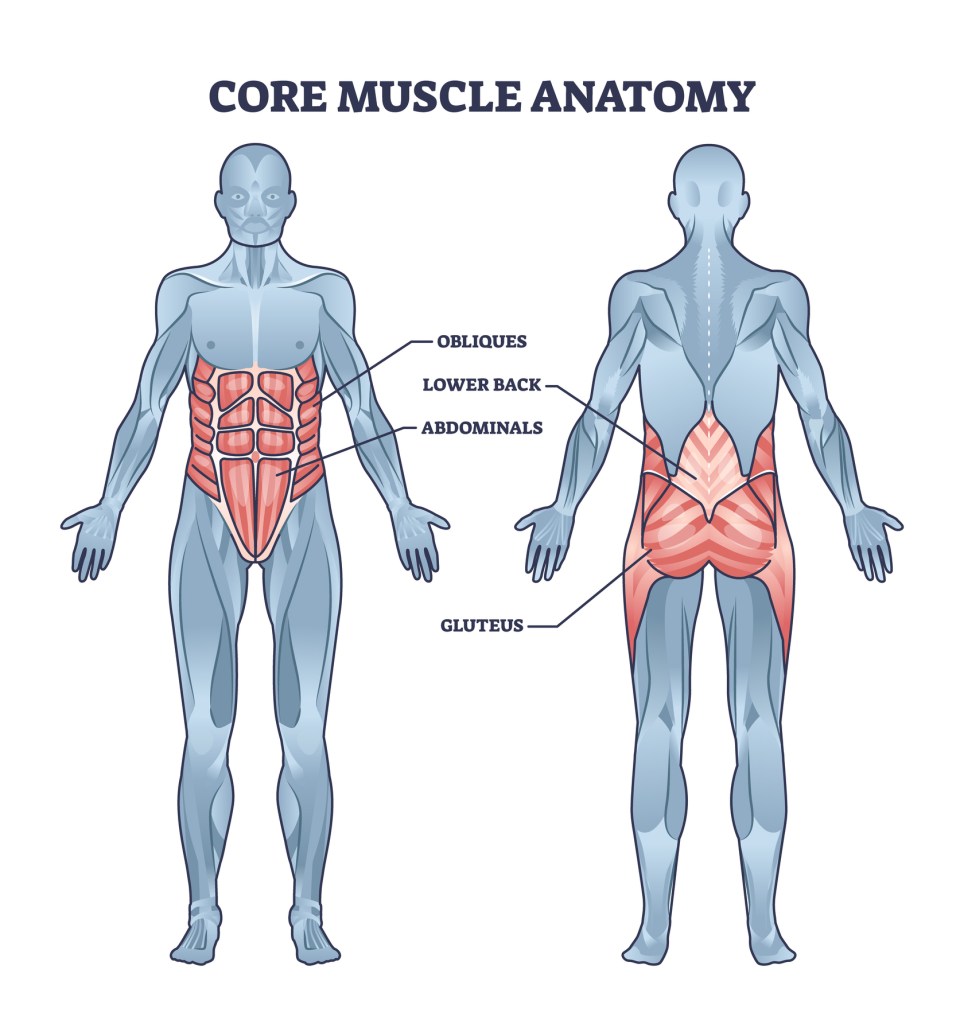
Often, people will go to the gym prior to or after work and will perform exercises like sit-ups or bicycles (which is fine if you have those stabilizer muscles engaged). However, most people are not moving the majority of the day and do not have these muscles developed. And because this repetitive sedentary lifestyle weakens the deep abdominal core the most, working out the superficial core muscles over the deeper core muscles will put our posture in structurally unsound positions. For example, our external obliques are great for generating significant movement to the side, but they aren’t close enough to our spine to provide good enough support in compromising positions, like a dead lift.
Here are some risk factors of weak stabilizing core muscles:
- Muscle pain
- Muscle strain
- Joint pain
- Spinal issues in extreme cases
Fortunately, there are some really simple exercises we can do to re-engage our muscles and remind our nervous system we have them in the first place. Some of these exercises are:
- Diaphramic Breathing Exercises
- Dead Bugs
- Glute Bridges
There are video demonstrations on our Youtube channel for the above 3 workouts: https://youtube.com/@functionally-fit?si=nybRsNFNMovkszhL
In addition to these exercises, below are a few tips and tricks you can employ throughout your day to strengthen your core.
- Move often: since sitting down for prolonged periods leads to routinely disengaged glutes and abdominals, getting up and moving will help increase blood flow and bring some movement back into those muscle regions.
- Perform these core exercises multiple times a week. Every day is ideal but every other day is good too.
- Even engaging your core during a long meeting is an excellent way to break the habit of sinking into the back of your desk chair.



 Functionally Fit
Leave a comment